
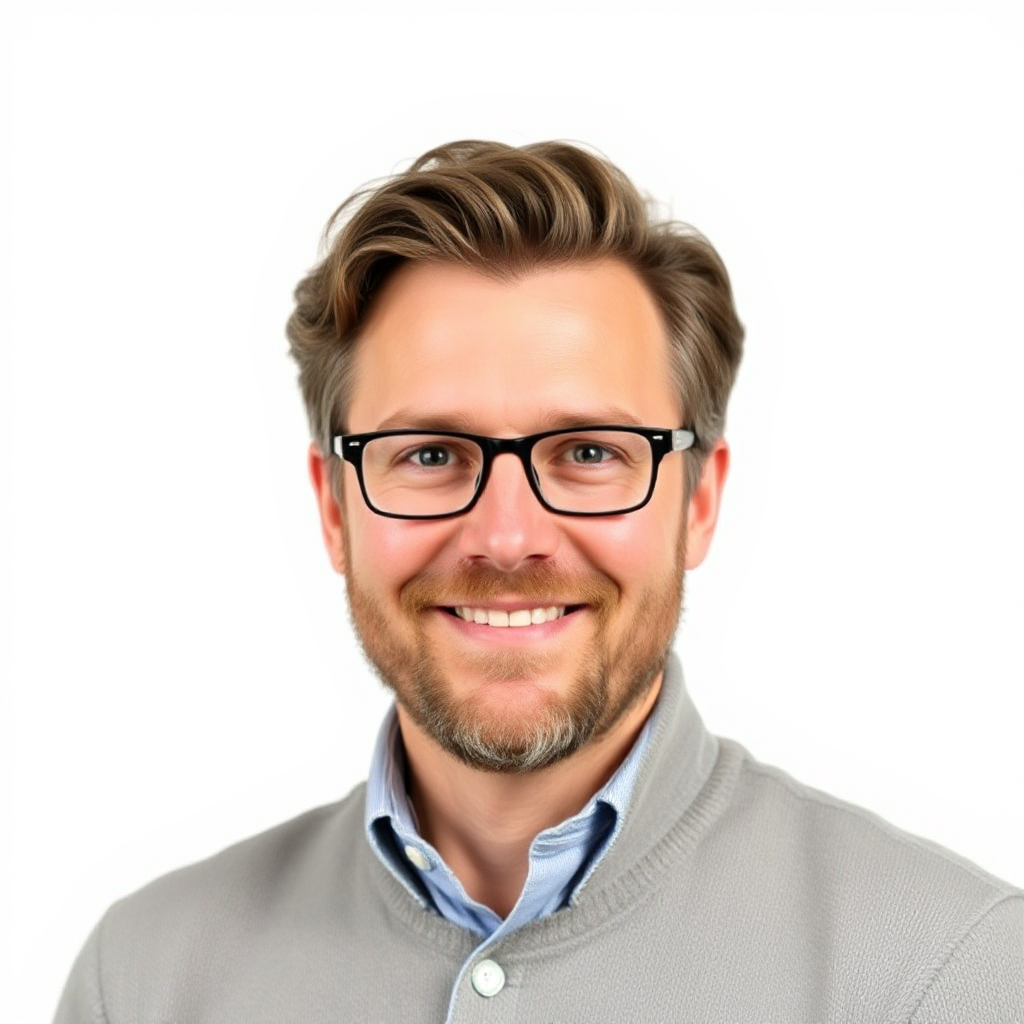

Donald Trump represents the "only person who can force" Russian head Vladimir Putin to engage in dialogue regarding the war in Ukraine, the Finnish president has asserted.
Alexander Stubb additionally stated that Finland would never accept annexed Crimea as within Russia, and that he aimed to ensure Ukraine transitioned to an EU and ideally NATO member once the hostilities ended.
Before Ukrainian President Volodymyr Zelensky's discussions with Trump at the White House on Friday, during which he stated to the US president: "I believe we can end this military engagement with your help."
Simultaneously, Trump disclosed that Putin has consented to meet directly with him in Hungary.
Conflict Resolution Initiatives and Financial Pressure
The US commander-in-chief declared on Friday that Putin "desires to get it concluded. I am convinced that President Zelensky wants to get it ended. Now we have to get it done".
Zelensky stated at the White House that Ukraine was willing to talk in whichever format and desired peace, but maintained that Putin needed to be "forced" into terminating the war.
Stubb revealed that Trump had previously asked him - while playing a game of golf - whether he could have faith in Putin; and Stubb's answer was negative.
"What we require is not so much the power of the carrot to persuade Russia to the negotiating table, it's rather the coercion that will compel them.
"Thus you have to pressure Russia to arrive to the negotiating table for peace and that's the agreement President Trump is trying to establish."
Financial Sanctions and Strategic Factors
Stubb was positive about Trump's capacity, saying he believed peace negotiations had probably progressed more in the last eight months during Trump's current administration than in the preceding three years.
Russia took control of the Crimean peninsula in 2014 and began a full-scale invasion of Ukraine in 2022.
Stubb emphasized that Finland would not ever recognize Crimea, or the areas of Donetsk or Luhansk, as Russian territory. Russia occupies 70% of Donetsk and nearly all of adjacent Luhansk.
He declared "the sole parties who can decide on the territorial issue are the Ukrainians themselves".
"I aim to make certain that Ukraine, when this conflict is concluded, maintains its sovereignty, preserves its independence - that is to say becomes an EU member state and ideally a NATO member - and also upholds its territorial integrity. That is what we are all fighting for currently," Stubb commented.
Financial Challenges and Prospective Outlook
Stubb pointed out that Russia's economic situation - smaller than Italy's - was struggling, with the country's reserves reduced, growth "virtually around zero", and inflation raised to between 10% and 20%.
Stubb proposed economic sanctions should be utilized to compel Russia to the discussions, primarily giving €200bn worth of frozen Russian holdings to Ukraine as a credit that would be retained there if Russia did not pay compensation after peace negotiations.
He also wanted to see transfers of Russian oil and gas to Europe - which have decreased by 80% - cut off. Restrictions could be put on countries that acquire Russian oil and gas, he said, in combined with the latest European restrictions aimed at Russia.
Strategic Evaluation and Conflict Resolution Initiative
Stubb stated "all the tactical moves of Putin have been an complete failure". Russia had been ineffective in seeking to occupy Ukraine, to split Europe and to divide NATO, with two new members - Finland and Sweden - incorporated conversely.
He stated Europe's "partnership of the eager" was equipped to offer protection assurances to Ukraine, with the crucial assistance in the airspace, on the maritime areas and with information.
But they required a support from the US, especially in air defenses, information gathering and military activities, he added.
Stubb expressed he hoped to see some outcomes from a dual-stage peace initiative - the primary a truce to end the loss of life and the following an extended peace process - "in the near future".
"We'll persist in addressing it. The key is to participate and try to identify solutions and be pragmatic. In diplomacy you always have to address the world as it is, not what you would wish it to be, but let's do peace."


